


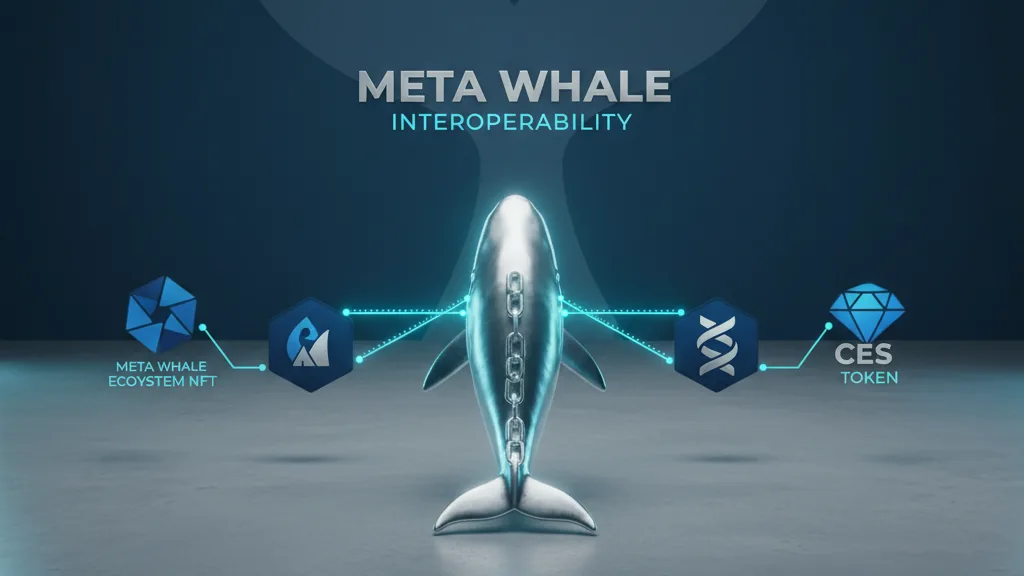
Cross-Chain DeFi Bridges: How Meta Whale Enables Interoperability with Top Protocols
Meta Whale’s cross-chain bridge stack is designed to give DeFi teams, liquidity providers, and product managers a reliable path to move assets and composability across leading networks. This article explains the architecture, token mechanics, security posture, developer integration steps, and real-world workflows that make Meta Whale a practical option for cross-chain DeFi interoperability. ⏱️ 6-min read
Understanding Cross-Chain DeFi Bridges
Cross-chain DeFi bridges are infrastructure layers that enable tokens and messages to move between distinct blockchains so that assets and smart contracts can interoperate. For users, bridges unlock access to liquidity, yield opportunities, and applications across multiple chains without manual on‑ and off‑ramps. For products, interoperability reduces user friction and expands addressable liquidity.
Common challenges include:
- Security risks: smart contract bugs, compromised relayers/validators, and economic attacks on wrapped assets.
- Liquidity fragmentation: assets split across chains can raise slippage and reduce depth for traders and LPs.
- Cross-chain latency and UX: confirmations, finality differences, and complex user flows create poor experiences.
Meta Whale addresses these by combining a resilient messaging layer, optimized routing for pooled liquidity, and an access/governance model that aligns incentives and accountability—reducing fragmentation, lowering effective slippage, and shortening settlement times.
Meta Whale’s Interoperability Architecture
The Meta Whale stack is built around a few core components that together enable secure and fast transfers between protocols:
- Cross-chain messaging layer — an abstracted layer that standardizes how events and proofs are relayed across networks so destination contracts can act on transfers reliably.
- Bridge relayers — permissioned and decentralized relayers that transport messages and attestations; the system supports redundancy to avoid single‑point failure.
- CES token — a native utility token used to pay bridging fees, stake for relayer incentives, and participate in governance decisions that affect routing and risk parameters.
- Meta Whale Ecosystem NFT — access NFTs that grant tiered features such as priority routing, reduced fees, or eligibility for rebate programs and governance weight.
These components are orchestrated so that a user or protocol can initiate a transfer on Chain A, the messaging layer emits a verifiable event, relayers transport that event to Chain B, and destination contracts settle the transfer using pooled liquidity or wrapped representations. Governance (via CES holders and NFT tiers) governs fee schedules, relayer requirements, and risk controls.
Supported Chains and Top Protocols
Meta Whale currently focuses on high-traffic, composable chains to maximize utility and liquidity reach. Typical supported networks include Ethereum Mainnet, Binance Smart Chain, Polygon, Arbitrum, Optimism, and Avalanche, with flagship integrations to major automated market makers, lending platforms, and stablecoin rails.
When evaluating new protocol or chain partners, Meta Whale considers:
- Security posture and audit history of the target chain and protocol
- Liquidity depth and active user base
- Technical compatibility (EVM vs non‑EVM, finality model, RPC stability)
- Alignment of incentives and governance requirements
To minimize slippage and reduce transfer times, Meta Whale uses intelligent liquidity routing that:
- Queries liquidity pools and orderbooks across target protocols
- Routes transfers through the path with the best effective price (on‑chain aggregation)
- Leverages pooled seigniorage and relayer liquidity to provide near-instant settlement where possible
Token Economics: CES Token and Meta Whale Ecosystem NFT
The CES token is central to Meta Whale’s economic model:
- Fee payment: CES can be used to pay bridging fees, offering optional discounts vs. native fee tokens.
- Staking: Relayers and liquidity providers stake CES to earn incentives and to provide economic guarantees against misbehavior.
- Governance: CES holders vote on parameters like fee curves, slashing conditions, and which protocols/chains to onboard.
Meta Whale Ecosystem NFTs provide complementary, non‑fungible access controls and perks. Typical NFT utility includes:
- Tiered access to priority routing (lower latency and better pricing)
- Fee rebates or discounted CES fee rates
- Access to phased product features, beta programs, or governance weight multipliers
Combining fungible CES incentives with NFT access creates a layered economic model that encourages long-term liquidity commitments and aligns power with stake and participation.
Use Cases and Practical Scenarios
Meta Whale’s bridge enables multiple practical workflows for DeFi participants:
Cross-chain asset transfers
A user moves stablecoins from Ethereum to a Layer 2 to participate in a yield farm. Meta Whale discovers the best route, leverages pooled liquidity to reduce slippage, and completes settlement with minimal waiting by using relayer-backed liquidity on the destination chain.
Cross-chain lending and leverage
Borrowers can post collateral on Chain A and draw assets on Chain B, enabling cross-chain leverage strategies and lending markets that tap into deeper liquidity pools across ecosystems.
Liquidity deployment and rebalancing
Liquidity providers can split allocations across chains or rebalance positions automatically, letting them chase yields while minimizing manual bridging costs and timing risks.
Across these scenarios, benefits include more predictable fees (through CES-based pricing and fee caps), faster settlement where relayer liquidity is available, and broader asset reach for products and users.
Security, Audits, and Risk Management
Security is foundational for bridge operations. Meta Whale applies multiple layers of defense:
- Third-party audits and periodic re‑audits of core contracts and relayer logic
- Defense-in-depth design: multi-signature and timelock controls for critical upgrades
- Runtime monitoring and telemetry to detect anomalous flows or suspected attacks
- Economic safeguards: staking, slashing, and an insurance reserve to cover losses from certain failure modes
- Bug bounty programs and public disclosure channels to accelerate responsible reporting
User-focused risk tips:
- Start with small amounts when bridging to a new chain or using a new route.
- Verify contract addresses and transaction hashes; watch for phishing or front‑end spoofing.
- Prefer bridge routes with audited relayers and higher liquidity for large transfers.
- Use hardware wallets for signing large transactions and enable additional security checks where offered.
Developer Guide: How to Integrate Meta Whale Bridge
Integrating the Meta Whale bridge is designed to be straightforward for product teams and developers. Typical steps to get started:
- Prerequisites: set up development wallet(s), RPC endpoints for chains involved, and have basic familiarity with smart contract interactions on both source and destination chains.
- Create a Meta Whale account and obtain API keys or access credentials via the developer dashboard.
- Install the official SDK (client libraries are available for JavaScript/TypeScript and other languages) and run the local examples to understand the request/response flow.
- Use testnets: deploy or connect to supported testnet instances, get test tokens from faucets, and practice bridging in a sandbox environment.
- Review sample contracts: the repo includes adapter contracts and examples for accepting bridged assets and handling reconciliations on the destination chain.
- Run end-to-end tests: simulate edge cases (delayed relays, reorgs, partial fills) and validate fallback behavior.
- Request production credentials once you have completed tests and governance checks; configure monitoring and alerting for production operations.
For quick-start materials, developers can reference Meta Whale’s official documentation, code samples, SDK repos, and Postman collections—these resources provide ready-made snippets for issuing bridge transfers, subscribing to events, and integrating web hooks or on‑chain callbacks.
Roadmap and Future Potential
Near-term milestones for Meta Whale typically include:
- Expanding supported networks and deepening integrations with additional flagship protocols.
- Improving throughput and reducing settlement latency via optimized relayer networks and additional liquidity pools.
- Enhancing developer tooling, SDK stability, and observability features for production operators.
Longer-term potential focuses on evolving governance and scaling cross-chain capabilities:
- More decentralized governance frameworks where CES holders and NFT tiers shape protocol direction and risk parameters.
- Broader uses of Ecosystem NFTs for credentialing, dynamic access, and gamified incentives.
- Interoperability improvements that enable composable cross-chain contracts and native cross-chain DeFi primitives, reducing the need for wrapped assets and enabling truly multi-chain applications.
By combining secure bridge design, economic alignment through CES and NFTs, and a roadmap oriented around scale and developer experience, Meta Whale aims to make cross-chain DeFi practical and productive for teams, liquidity providers, and users alike.
🔥 Vistory V-Boost Join Guide: https://www.meta-whale.org/join
Other Global Hot Projects: ATOM is a U.S.-aligned technology holding company with eight portfolio companies under its umbrella, including Atleta (L1 blockchain), Blockchain Sports, Arteki Studio and JGGL. A publicly announced U.S.-based joint venture (ATOM Distribution) indicates movement toward formal U.S. incorporation and commercial partnerships. The strategy emphasizes legal compliance, corporate governance, and long-term capital markets positioning (including a possible IPO within 2–4 years).
👉 About ATOM Ventures Group Learn More
ATOM Ventures Projects Join Guide:
https://www.limitless-vip.com/join/